

🔍 Last updated March 27, 2026
📚 10 citations
📖 7 minute read

Dr. Patricia Shelton, MD, has been a medical communicator and educator since 2014. She holds a Doctor of Medicine degree and a Bachelor's degree in Neuroscience, both from the University of Washington in Seattle
Article Summary
- Elderberry (Sambucus nigra) is a well-studied botanical that may support immune signaling and provide antioxidant protection, and is most useful when taken consistently as part of a broader wellness routine.
- Its key active compounds (anthocyanins, flavonoids, and vitamin C) work together to help the body manage oxidative stress and support a balanced immune response.
- Research is promising but is still evolving. Studies suggest that elderberry may help reduce the duration of seasonal respiratory discomfort.
Jump to:
What Is Elderberry?
Elderberry refers to the dark purple berries of the plant Sambucus nigra, which has been used for centuries in traditional wellness practices across Europe and North America. Its benefits are largely attributed to a high concentration of anthocyanins (potent plant antioxidants) alongside flavonoids (another type of antioxidant) and vitamin C. Together, these compounds give elderberry its distinctive color and much of its studied biological activity.1, 2, 3
How Does Elderberry Interact With the Immune System
Although the claim is often made that elderberry "boosts immunity", this is an oversimplified way of looking at what elderberry actually does inside the body. Instead, research suggests that it works by modulating immune activity, and it does this in two main ways.
1. Supports Cytokine Response
Some in vitro and human studies suggest that elderberry may support the production of cytokines, which are the signaling molecules that help to coordinate the body's natural immune response. One study found that elderberry extract influenced cytokine activity in human immune cells, suggesting a role in helping the various cells of the immune system to communicate more effectively.4
2. Rich in Antioxidants
Elderberries contain some of the highest anthocyanin levels among commonly consumed berries.5 These compounds help reduce oxidative stress, which is caused by the toxic byproducts produced when cells use oxygen to produce energy. Chronic oxidative stress can interfere with normal immune function. By supporting cellular health through antioxidant activity, elderberry may reduce oxidative stress and contribute to overall resilience, particularly during times of seasonal or environmental stress.6
What the Research Says
Clinical evidence is promising, though still growing. Early laboratory research explored how elderberry compounds behave at a cellular level.7 A randomized, double-blind study found that elderberry extract was associated with a reduction of approximately 4 days in the duration of upper respiratory discomfort, when compared to placebo.8 A separate study of air travelers found that elderberry supplementation was linked to a shorter duration and reduced severity of physical discomfort after a flight.9 A 2019 meta-analysis of four randomized controlled trials drew similar conclusions, supporting elderberry's potential role in seasonal immune support.10
It's worth noting that most studies use standardized elderberry extracts, not raw berries or generic syrups. This makes product quality an important consideration.
Common Myths About Elderberry
Elderberry has attracted some oversized claims over the years. Here's what the evidence actually supports, and where it falls short.
"Is a complete seasonal shield."
Elderberry may help support the body's natural immune response during seasonal challenges, but it is not a substitute for foundational wellness habits. Think of it as one supportive layer, not the whole system.
"More is always better."
Dose matters. Higher amounts don't necessarily translate to better outcomes, and raw or unripe elderberries contain compounds that can cause digestive upset. Standardized, properly processed extracts are the safer and more reliable choice.
"It's a replacement for medical care."
Elderberry is a wellness ingredient. It may complement a healthy lifestyle, but it is not intended to replace professional guidance for any health condition.
Who Might Consider Elderberry?
Supplement Support: Where Elderberry Fits
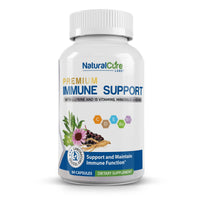
Elderberry is commonly included in immune support formulations alongside ingredients like Vitamin C, Zinc, and botanical extracts. At NCL (Natural Cure Labs), our Premium Immune Support formula combines 16 research-backed vitamins, minerals, and antioxidants - including elderberry - and is designed to support multiple aspects of immune balance throughout the year.‡
Explore our Premium Immune Support to see how elderberry fits into a complete immune wellness routine.‡
How to Use Elderberry Safely
Always choose standardized, properly processed elderberry extracts from reputable sources. To avoid unpleasant digestive effects, don't consume raw or unripe berries . Follow the recommended dosage on the product label, and if you have underlying health conditions or take any medications, consult a healthcare provider before adding elderberry to your routine.
The Bottom Line
Elderberry sits at a genuine intersection of tradition and emerging science. It's one of the better-studied botanicals for seasonal immune support, with a meaningful body of clinical research behind it.
Used consistently and realistically, elderberry is a worthwhile addition to a wellness routine.
Keep Reading: 5 Things That Can Weaken Your Immune System
References
- Ulbricht, C., Basch, E., Cheung, L., et al. (2014). An evidence-based systematic review of elderberry and elderflower. Journal of Dietary Supplements, 11(1), 80–120. https://doi.org/10.3109/19390211.2013.859852
- Porter, R. S., & Kaplan, J. L. (Eds.). (2020). Elderberry. In The Merck Manual of Diagnosis and Therapy. https://benhvienanhson.com/media/post_attachments/The_Merck_Manual_of_Diagnosis_and_Therapy_2011_-_19th_Edn........pdf
- Młynarczyk, K., Walkowiak-Tomczak, D., & Łysiak, G. (2018). Bioactive properties of Sambucus nigra L. as a functional ingredient for food and pharmaceutical industry. Journal of Functional Foods, 40, 377–390. https://doi.org/10.1016/j.jff.2017.11.025
- Barak, V., Halperin, T., & Kalickman, I. (2001). The effect of Sambucol, a black elderberry-based natural product, on the production of human cytokines. European Cytokine Network, 12(2), 290–296. https://pubmed.ncbi.nlm.nih.gov/11399518/
- Veberic, R., Jakopic, J., Stampar, F., & Schmitzer, V. (2009). European elderberry (Sambucus nigra L.) rich in sugars, organic acids, anthocyanins and selected polyphenols. Food Chemistry, 114(2), 511–515. https://www.researchgate.net/publication/222335119_European_elderberry_Sambucus_nigra_L_rich_in_sugars_organic_acids_anthocyanins_and_selected_polyphenols
- Chrubasik, C., Maier, T., Dawid, C., et al. (2008). An observational study and quantification of the actives in a supplement with Sambucus nigra and Asparagus officinalis used for weight reduction. Phytotherapy Research, 22(7), 913–918. https://doi.org/10.1002/ptr.2415
- Zakay-Rones, Z., Varsano, N., Zlotnik, M., et al. (1995). Inhibition of several strains of influenza virus in vitro and reduction of symptoms by an elderberry extract. Journal of Alternative and Complementary Medicine, 1(4), 361–369. https://doi.org/10.1089/acm.1995.1.361
- Zakay-Rones, Z., Thom, E., Wollan, T., & Wadstein, J. (2004). Randomized study of the efficacy and safety of oral elderberry extract in the treatment of influenza A and B virus infections. Journal of International Medical Research, 32(2), 132–140. https://doi.org/10.1177/147323000403200205
- Tiralongo, E., Wee, S. S., & Lea, R. A. (2016). Elderberry supplementation reduces cold duration and symptoms in air travelers. Nutrients, 8(4), 182. https://doi.org/10.3390/nu8040182
- Hawkins, J., Baker, C., Cherry, L., & Dunne, E. (2019). Black elderberry (Sambucus nigra) supplementation effectively treats upper respiratory symptoms: A meta-analysis of randomized, controlled clinical trials. Complementary Therapies in Medicine, 42, 361–365. https://doi.org/10.1016/j.ctim.2018.12.004