

📝 Medically reviewed by Dr. Trager Hintze
🔍 Last updated Apr 19, 2026
📚 10 citations
📖 12 minute read

Dr. Hintze completed his Doctor of Pharmacy degree at Idaho State University College of Pharmacy, followed by post-graduate residencies at the University of Oklahoma College of Pharmacy and University Hospital in San Antonio, Texas. Dr. Hintze is an Assistant Professor in the Department of Medical Education at the Alice L. Walton School of Medicine in Bentonville, Arkansas.
Article Summary
- Monolaurin and oregano oil are both naturally derived compounds that have been studied for their potential immune-supporting properties, but they work through different mechanisms
- Monolaurin is a monoglyceride derived from lauric acid (found in coconut oil and breast milk), while oregano oil's primary active compound is carvacrol, a phenolic compound from the Origanum vulgare plant
- Research has directly compared the two in laboratory settings, finding that both showed activity against certain microorganisms, though their effectiveness varied by context
- The choice between monolaurin and oregano oil depends on individual preferences, tolerance, and wellness goals - some people choose to use both as part of a comprehensive wellness routine
Jump to:
- What Is Monolaurin and How Does It Work?
- What Is Oregano Oil and What Are Its Active Compounds?
- How Do Monolaurin and Oregano Oil Compare in Research?
- What Are the Safety and Tolerance Differences?
- How Do the Available Forms and Dosing Compare?
- Can You Take Both Monolaurin and Oregano Oil Together?
- Which One Is Right for You?
- Final Thoughts
- References
When it comes to natural immune support, monolaurin and oregano oil are two of the most frequently discussed options. Both have been the subject of scientific research exploring their potential properties, and both have developed dedicated followings within the wellness community.
However, despite being grouped together in the broader category of natural immune support, monolaurin and oregano oil are fundamentally different compounds with distinct mechanisms, safety profiles, and practical considerations. Understanding these differences can help consumers make a more informed choice about which option - or combination - best fits their individual needs.
Keep reading to learn how monolaurin and oregano oil compare in terms of research, safety, dosing, and practical use.
See Related: Monolaurin: What It Is and Where Does It Come From?
What Is Monolaurin and How Does It Work?
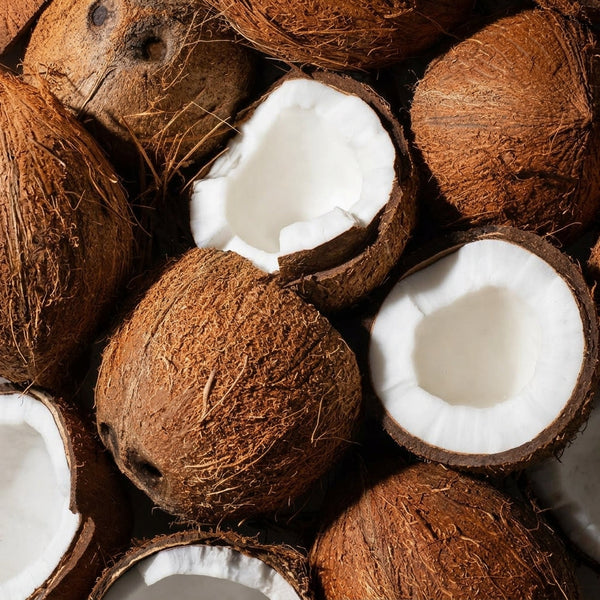
Monolaurin (glycerol monolaurate) is a monoglyceride - a type of fat molecule formed when glycerol bonds with a single molecule of lauric acid. Lauric acid is a medium-chain fatty acid found naturally in coconut oil and human breast milk.1 4
Research has explored monolaurin's potential mechanisms of action, particularly its studied interactions with microbial cell membranes. In vitro studies have suggested that monolaurin may interact with the lipid membranes of certain microorganisms, potentially disrupting their structural integrity.2 4
A 2019 review summarized the available literature on monolaurin as a dietary supplement, noting its GRAS (Generally Recognized as Safe) status from the FDA and its long history of safe use in the food industry. The review also highlighted that while laboratory studies have been promising, formal human clinical trials remain limited.1
What Is Oregano Oil and What Are Its Active Compounds?
Oregano oil is an essential oil extracted from the leaves and flowers of Origanum vulgare, a flowering plant in the mint family. The primary bioactive compound in oregano oil is carvacrol, a phenolic monoterpenoid that typically constitutes the majority of the oil's composition. Thymol, another phenolic compound, is the second most abundant active constituent.8 9
Carvacrol has been the subject of extensive research. A comprehensive review described its studied properties, including potential antioxidant activity and interactions with various microorganisms.10 Research has also explored carvacrol's mechanism of action, suggesting it may interact with microbial cell membranes in ways that compromise their permeability.7
Beyond its primary active compounds, oregano oil contains a complex mixture of terpenes, phenols, and other bioactive molecules. A review published in Molecules explored the biological activity of oregano essential oils beyond their well-known properties, highlighting their broader potential as a source of naturally occurring bioactive compounds.9
How Do Monolaurin and Oregano Oil Compare in Research?
One of the most valuable aspects of the monolaurin-vs.-oregano-oil comparison is that researchers have actually studied both compounds side by side. Two studies by the same research group provided direct comparisons of monolaurin and oregano oil (origanum) against the same microorganisms under identical laboratory conditions.
The first study measured minimum inhibitory concentrations (MICs) of several herbal essential oils alongside monolaurin against both gram-positive and gram-negative organisms. The results showed that monolaurin demonstrated notable activity against gram-positive organisms, while origanum oil showed broader activity across both categories.3
A companion study examined the effects of essential oils and monolaurin in both laboratory and animal models. This research explored how these compounds performed under more complex biological conditions beyond simple in vitro testing.5
Meanwhile, a separate study investigated oregano oil's properties against multiple clinical isolates, including those that had developed resistance to conventional approaches. The researchers found that oregano oil demonstrated activity against several resistant organisms in laboratory settings.6
It is important to note that in vitro (laboratory) results do not always translate directly to real-world outcomes. Both monolaurin and oregano oil require further human clinical research to fully understand their potential benefits when taken as supplements.
What Are the Safety and Tolerance Differences?
One of the most significant practical differences between monolaurin and oregano oil relates to their safety profiles and how well they are tolerated.
Monolaurin
Monolaurin holds GRAS status from the FDA and has a long history of use in the food industry as an emulsifier and preservative. The 2019 clinical review noted that monolaurin is generally well-tolerated, with no significant adverse effects reported in the available literature.1 It is derived from coconut oil, a common dietary fat, and does not typically cause digestive discomfort at recommended supplement doses.
Oregano Oil
Oregano oil is a potent essential oil that can cause digestive discomfort, heartburn, or nausea in some individuals, particularly when taken on an empty stomach or at higher doses. Because carvacrol and thymol are phenolic compounds, oregano oil may also interact with certain medications, including blood thinners and blood glucose-supporting supplements.10
Oregano oil is generally recommended for short-term use rather than continuous daily supplementation. Individuals who are pregnant, nursing, or allergic to plants in the Lamiaceae (mint) family should consult a healthcare provider before using oregano oil.
How Do the Available Forms and Dosing Compare?
Monolaurin
- Available in capsules (typically 600mg or 800mg) and pellets (typically dosed at 1,000-3,000mg per serving)
- Capsules are convenient for daily use and travel
- Suitable for long-term, daily supplementation
- Tasteless and odorless in capsule form
Oregano Oil
- Available in liquid drops, softgels, and enteric-coated capsules
- Liquid forms have a strong, pungent taste that some find unpleasant
- Typically recommended for short-term or periodic use
- Enteric-coated capsules may help reduce digestive discomfort
The form factor and intended use pattern differ meaningfully between the two. Monolaurin is commonly taken as a daily wellness supplement, while oregano oil is more often used for shorter, targeted periods.
Can You Take Both Monolaurin and Oregano Oil Together?
Some individuals choose to incorporate both monolaurin and oregano oil into their wellness routine, sometimes at different times or for different purposes. Because these compounds work through different mechanisms, they are not redundant and may offer complementary support.
However, it is always advisable to consult a healthcare provider before combining supplements, particularly if you are taking medications or have existing health conditions. Starting with one supplement at a time can also make it easier to assess individual tolerance and response.
Which One Is Right for You?
The best choice depends on individual preferences, tolerance, and wellness goals. Here are some practical considerations to help guide the decision.
Monolaurin may be preferred if you:
- Want a supplement suitable for consistent, daily use
- Prefer a tasteless, odorless capsule format
- Have a sensitive stomach or experience digestive discomfort with strong herbal supplements
- Are looking for a supplement with GRAS status and a well-documented safety profile
Oregano oil may be preferred if you:
- Want a botanical supplement for short-term, targeted use
- Prefer liquid drops or are comfortable with a strong herbal taste
- Are interested in the broader range of bioactive compounds found in essential oils
For those who prefer monolaurin, NCL (Natural Cure Labs) offers two capsule-based options. The Premium Monolaurin 600mg provides a standard daily dose in a vegan, non-GMO, clean label formulation. For those seeking a higher potency, the Extra Strength Monolaurin 800mg offer more monolaurin per capsule with the same clean ingredient profile.
Final Thoughts
Monolaurin and oregano oil are both well-studied natural compounds with distinct characteristics. While research has explored both in laboratory settings - including head-to-head comparisons - neither has undergone the extensive human clinical trials needed to make definitive claims about their benefits.
What the evidence does suggest is that both compounds have unique properties worth considering as part of a broader approach to wellness. Monolaurin stands out for its gentle tolerability, GRAS safety status, and suitability for daily use. Oregano oil offers a different profile of bioactive compounds and may be better suited for short-term, targeted supplementation.
As with any supplement, quality matters. Look for products from manufacturers who use GMP-certified facilities, conduct third-party testing, and maintain transparent labeling practices.
Keep Reading: Andrographis vs. Echinacea: Which One is Better?
References:
- Barker, L. A., Bakkum, B. W., & Chapman, C. (2019). The clinical use of monolaurin as a dietary supplement: A review of the literature. Journal of Chiropractic Medicine, 18(4), 305-310. https://doi.org/10.1016/j.jcm.2019.02.004
- Carpo, B. G., Verallo-Rowell, V. M., & Kabara, J. (2007). Novel antibacterial activity of monolaurin compared with conventional antibiotics against organisms from skin infections: An in vitro study. Journal of Drugs in Dermatology, 6(10), 991-998. https://pubmed.ncbi.nlm.nih.gov/17966176/
- Preuss, H. G., Echard, B., Enig, M., Brook, I., & Elliott, T. B. (2005). Minimum inhibitory concentrations of herbal essential oils and monolaurin for gram-positive and gram-negative bacteria. Molecular and Cellular Biochemistry, 272(1-2), 29-34. https://doi.org/10.1007/s11010-005-6604-1 Nitbani, F. O., Tjitda, P. J. P., Nitti,
- F., Jumina, J., & Detha, A. I. R. (2022). Antimicrobial properties of lauric acid and monolaurin in virgin coconut oil: A review. ChemBioEng Reviews, 9(5), 442-461. https://doi.org/10.1002/cben.202100050
- Preuss, H. G., Echard, B., Dadgar, A., Talpur, N., Manohar, V., Enig, M., Bagchi, D., & Ingram, C. (2005). Effects of essential oils and monolaurin on Staphylococcus aureus: In vitro and in vivo studies. Toxicology Mechanisms and Methods, 15(4), 279-285. https://doi.org/10.1080/15376520590968833
- Lu, M., Dai, T., Murray, C. K., & Wu, M. X. (2018). Bactericidal property of oregano oil against multidrug-resistant clinical isolates. Frontiers in Microbiology, 9, 2329. https://doi.org/10.3389/fmicb.2018.02329
- Xu, J., Zhou, F., Ji, B. P., Pei, R. S., & Xu, N. (2008). The antibacterial mechanism of carvacrol and thymol against Escherichia coli. Letters in Applied Microbiology, 47(3), 174-179. https://doi.org/10.1111/j.1472-765X.2008.02407.x
- Maczka, W., Twardawska, M., Grabarczyk, M., & Winska, K. (2023). Carvacrol - a natural phenolic compound with antimicrobial properties. Antibiotics, 12(5), 824. https://doi.org/10.3390/antibiotics12050824
- Leyva-Lopez, N., Gutierrez-Grijalva, E. P., Vazquez-Olivo, G., & Heredia, J. B. (2017). Essential oils of oregano: Biological activity beyond their antimicrobial properties. Molecules, 22(6), 989. https://doi.org/10.3390/molecules22060989
- Sharifi-Rad, M., Varoni, E. M., Iriti, M., Martorell, M., Setzer, W. N., del Mar Contreras, M., Salehi, B., Soltani-Nejad, A., Rajabi, S., Tajbakhsh, M., & Sharifi-Rad, J. (2018). Carvacrol and human health: A comprehensive review. Phytotherapy Research, 32(9), 1675-1687. https://doi.org/10.1002/ptr.6103